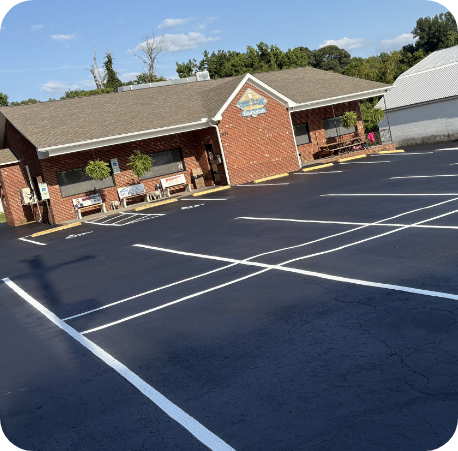
A: Most asphalt repairs in the Triad region last 3–7 years depending on traffic levels, moisture exposure, and whether routine maintenance like sealcoating is performed. Our weather—especially freeze–thaw cycles in late winter—can shorten asphalt lifespan, so proper drainage and scheduled upkeep are key to maximizing durability.
A: In the Greensboro, High Point, and Winston-Salem area, the ideal season for asphalt repair is March through October, when temperatures stay warm enough for the asphalt to bond properly. Emergency pothole and crack repairs can be performed year-round, but warm-weather repairs typically last longer.
A: Signs you may need asphalt repair include spider cracking, potholes, standing water, crumbling edges, and fading or raveling surfaces. The Triad’s mix of humidity, summer heat, and winter freeze cycles accelerates wear, so properties in Greensboro, Winston-Salem, and High Point often need repairs every 3–5 years to maintain structural integrity.
Asphalt Sealcoating Questions
A: Most asphalt in the NC Triad should be sealcoated every 2–3 years. Our climate—UV exposure, heavy summer heat, and winter moisture—breaks down asphalt binders more quickly than in northern states. Routine sealcoating helps protect against oxidation and prevents early cracking.
A: Yes. Sealcoating provides a protective barrier against sun, oil, salt, and water damage. In Greensboro and surrounding areas, where sudden weather swings can cause asphalt expansion and contraction, sealcoating helps prevent cracks and delays costly repairs.
A: Under normal NC summer conditions, sealcoat typically dries within 4–8 hours and fully cures within 24–48 hours. Shaded areas, cool weather, or high humidity—common in Winston-Salem and High Point—can extend dry times slightly.
Asphalt Crack Filling & Repair
A: You should fill cracks as soon as they appear. In the Triad region, water intrusion during winter freeze–thaw cycles can widen cracks rapidly, leading to potholes. Crack filling is far cheaper and prevents much larger structural damage.
A: We repair alligator cracks, linear cracks, edge cracks, and block cracking using hot-pour crack filler or asphalt patching depending on severity. Many Greensboro and High Point properties develop linear cracks due to soil movement, which can be repaired before they spread.
A: Professional crack filling typically lasts 2–5 years depending on traffic volume and weather exposure. The Triad’s climate causes more expansion and contraction than average, so staying ahead of cracks preserves the surface and prevents potholes.
Asphalt Patching
A: Most potholes come from water infiltration, freeze–thaw cycles, and heavy traffic. NC’s late-winter freezes followed by warm days are especially hard on asphalt, causing rapid pothole formation across the Triad.
A: Patching fixes localized damage—such as potholes, soft spots, or broken areas—while full replacement is needed when the asphalt base has failed across large sections. In High Point and Greensboro, patching is often enough unless the surface is 15–20+ years old or severely neglected.
A: Yes. Cold patch asphalt can be used in winter emergencies, but hot asphalt patching (the most durable option) is best done during spring, summer, and early fall. The Triad’s mild winters allow some flexibility, but warm-weather repairs consistently last longer.
Asphalt Parking Lot Striping & Marking
A: Striping typically lasts 1–2 years depending on traffic volume, sun exposure, and whether the lot was recently sealcoated. UV exposure in the Triad can fade lines faster, especially in open commercial lots.
A: Yes—sealcoating will cover your existing lines. After the pavement cures (usually 24–48 hours in the NC Piedmont), we repaint parking stall lines, ADA markings, fire lanes, directional arrows, and stop bars.
A: Absolutely. We follow North Carolina ADA requirements for accessible parking spaces, signage, van-accessible stalls, and access aisles. This is important for businesses in Greensboro, Winston-Salem, and High Point to maintain compliance and avoid violations.

Navigation
Black Pearl Sealcoating
and Striping Inc.
- 235 Liberty Hylls Lane,
Thomasville NC 27360 - 336-529-2104
- Contact us today!
- Mon–Fri, 8:00 AM–5:00 PM